Elisabeth de Brabant Contemporary
Andrea Bordács
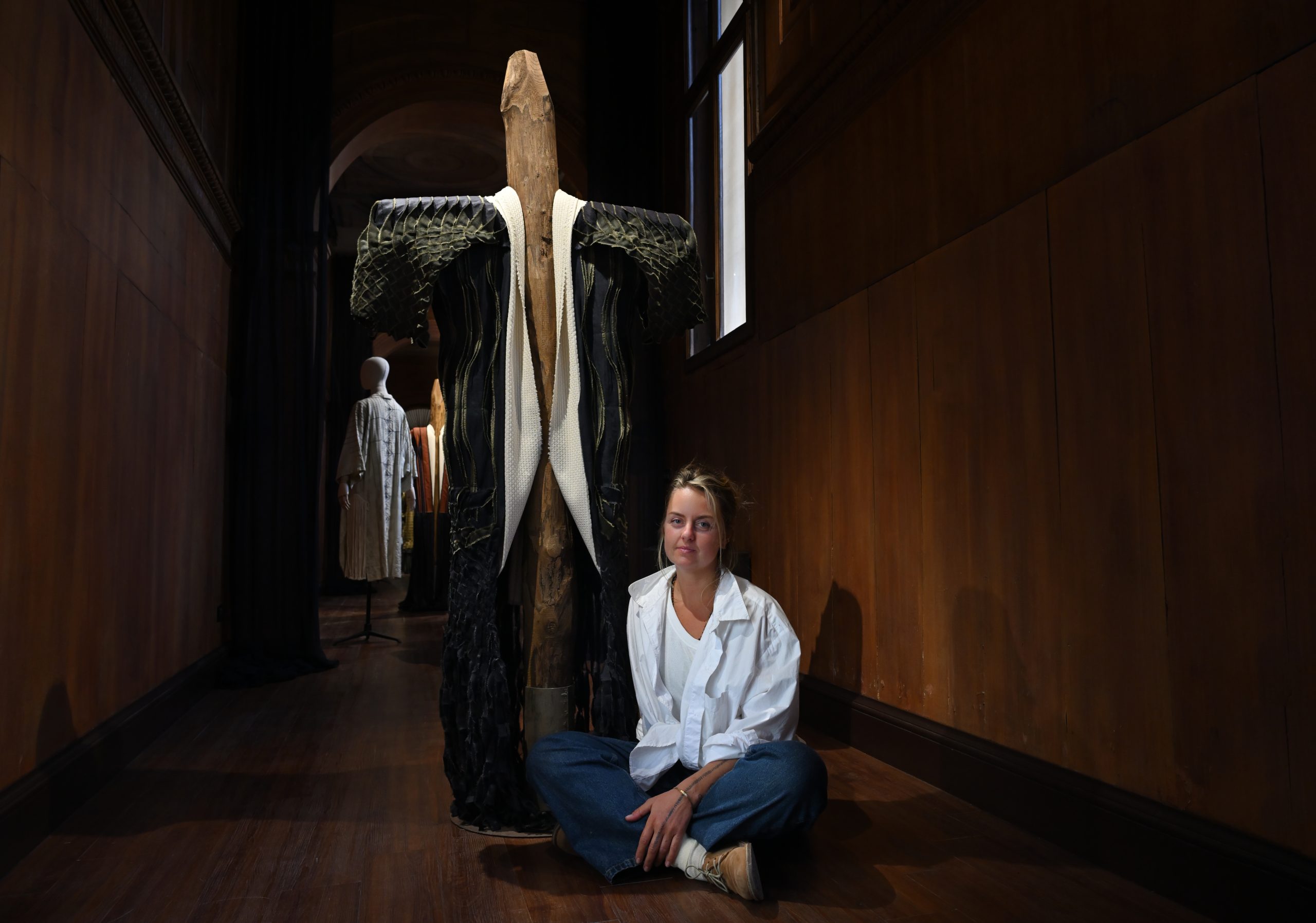
One year after initiating Female Armour, a series of autonomous sculptural works that examine the capacity of networks and communities to sustain themselves under pressure, Andrea Bordács returned to Venice for a winter residency in situ to create three autonomous sculptures Exuviae. The artist works with forms of armour historically adopted and reinterpreted by women across cultures, redefining protection as a structure of presence, agency, and resilience.
In biology, ‘exuviae’ are the remains left after an organism sheds its outer layer in order to grow. In Ancient Rome, the term referred to the armour of defeated enemies displayed as evidence of a transfer of power. In Andrea’s work, Exuviae pieces are material traces produced through the process of making, marking transformation through physical labour.
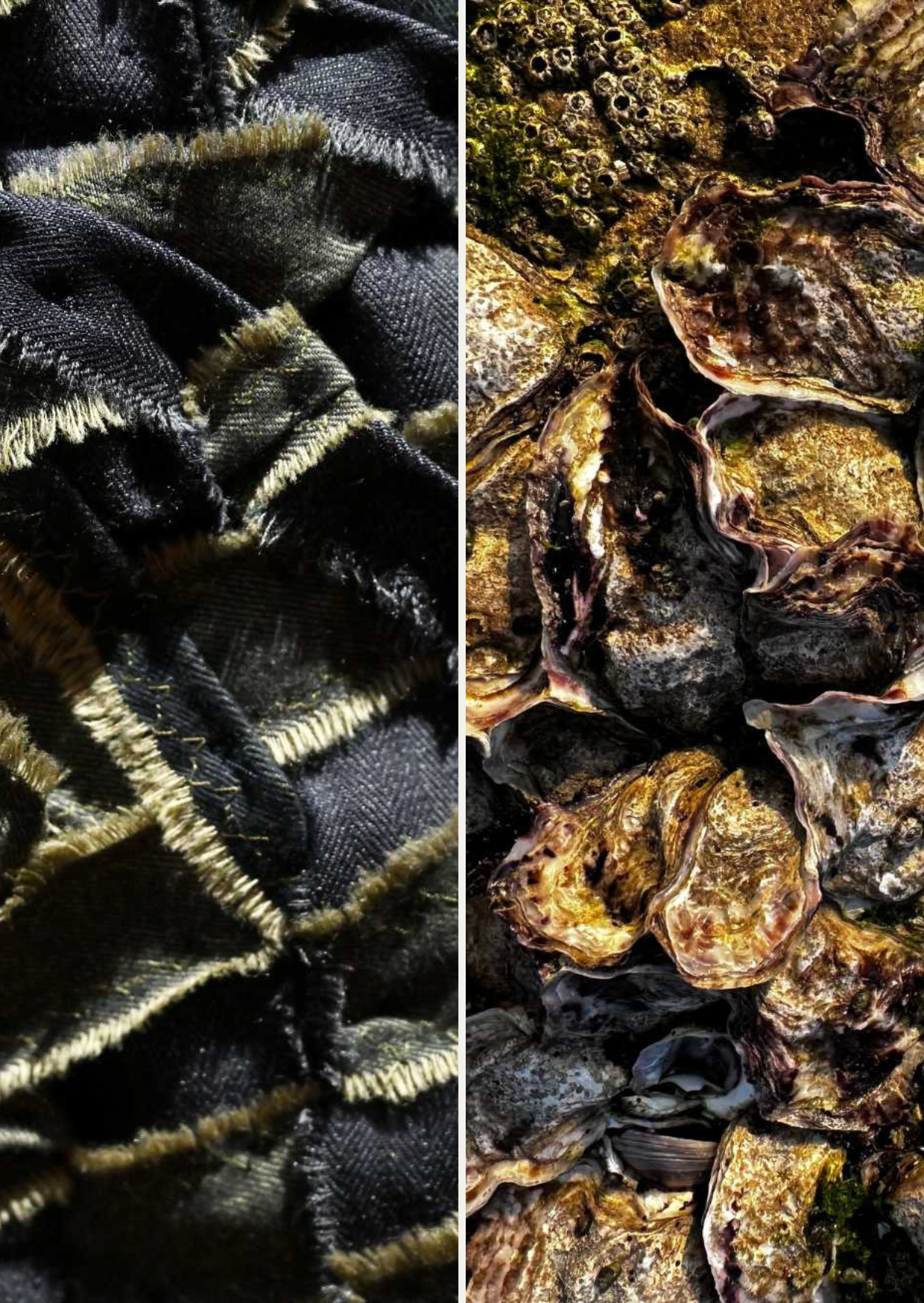
For the artist, this process becomes both metaphor and method. Andrea Bordács disassembles textiles from her personal archive without the use of cutting tools, then recombines them to create a dense and flexible sculptural material whose layered structure evokes organic membranes.
Artist merges entities collected in the lagoon (fragments, residues, organic traces) with her archival materials to create a Cabinet of Curiosities within the Oyster Alcove space. Historically, a ‘cabinet of curiosities’ assembled rare objects, natural specimens and artefacts in an attempt to grasp the complexity of the world. Andrea Bordács revisits this tradition through her own evolving archive. Shells, marine residues, fibres and found materials intertwine with sculptural elements, forming a unique timeless landscape. This evolving archive brings together materials whose histories and qualities are acknowledged, then reworked and combined to form new layers of meaning that emerge through the making of the work.
Andrea approaches Venice as an ecotone, a place where organisms persist through adaptation. Seeking to embody this principle, Andrea Bordács organized her daily rhythm around the changing environment of the lagoon and uses as material old wooden piles from the lagoon (briccole), marked by the action of shipworms, marine molluscs cha- racteristic of this ecosystem.
This new chapter follows her series Fuga Ascendente (To Take Flight / An Ascending Escape), a tribute to historic female craft traditions across Tuscany, Sicily, and Venice, presented by Anna Shpilko, contributing curator at Elisabeth de Brabant Contemporary within the immersive exhibition at Villa Marigola during the Lerici Music Festival in summer 2025.
Images by Zoltan Bodo