Elisabeth de Brabant Contemporary
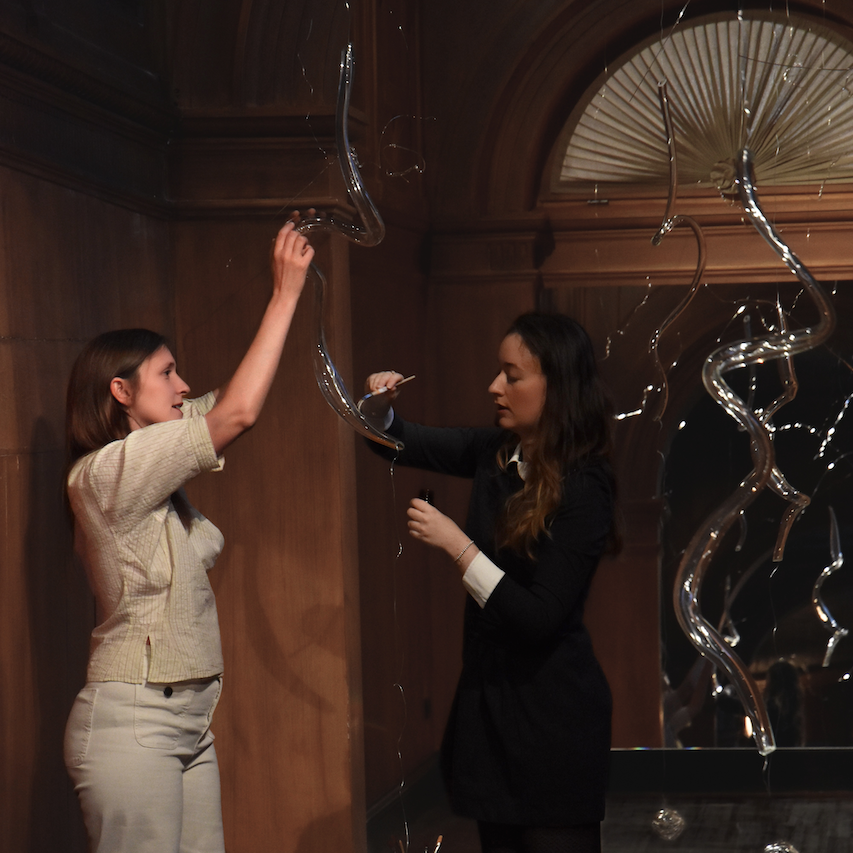
The artist Léa Dumayet invited olfactory designer Daphné Perryman-Holt to collaborate on creating an immersive installation within the exhibition CILIA. The olfactory layer developed in situ reveals elements fundamental to the making of glass: air, water, earth and flame.
‘Together with Léa, we imagined a sensory journey in dialogue with the space, where the humidity, dampness so present in Venice can almost be perceived as a living presence. Very quickly, the idea of translating glass, a fragile yet inert material, led us to explore its transformation.
Inspired by the work of Murano artisans, we chose to evoke the four elements involved in the glass creation proccess.
Air is expressed through an ozonic note, light and transparent, evoking an aerial breath. Water, denser and more fluid, is embodied by an aquatic sensation with slightly iodized accents, recalling the lagoons and submerged woods of Venice. Earth reveals itself through humid, organic notes, inspired by the undergrowth after rain, bringing an almost tactile depth. Finally, fire evokes heat and the transformation of matter.
Throughout the journey, you are invited to smell each work as a sensory experience—an immersion into the elements that give birth to glass.’

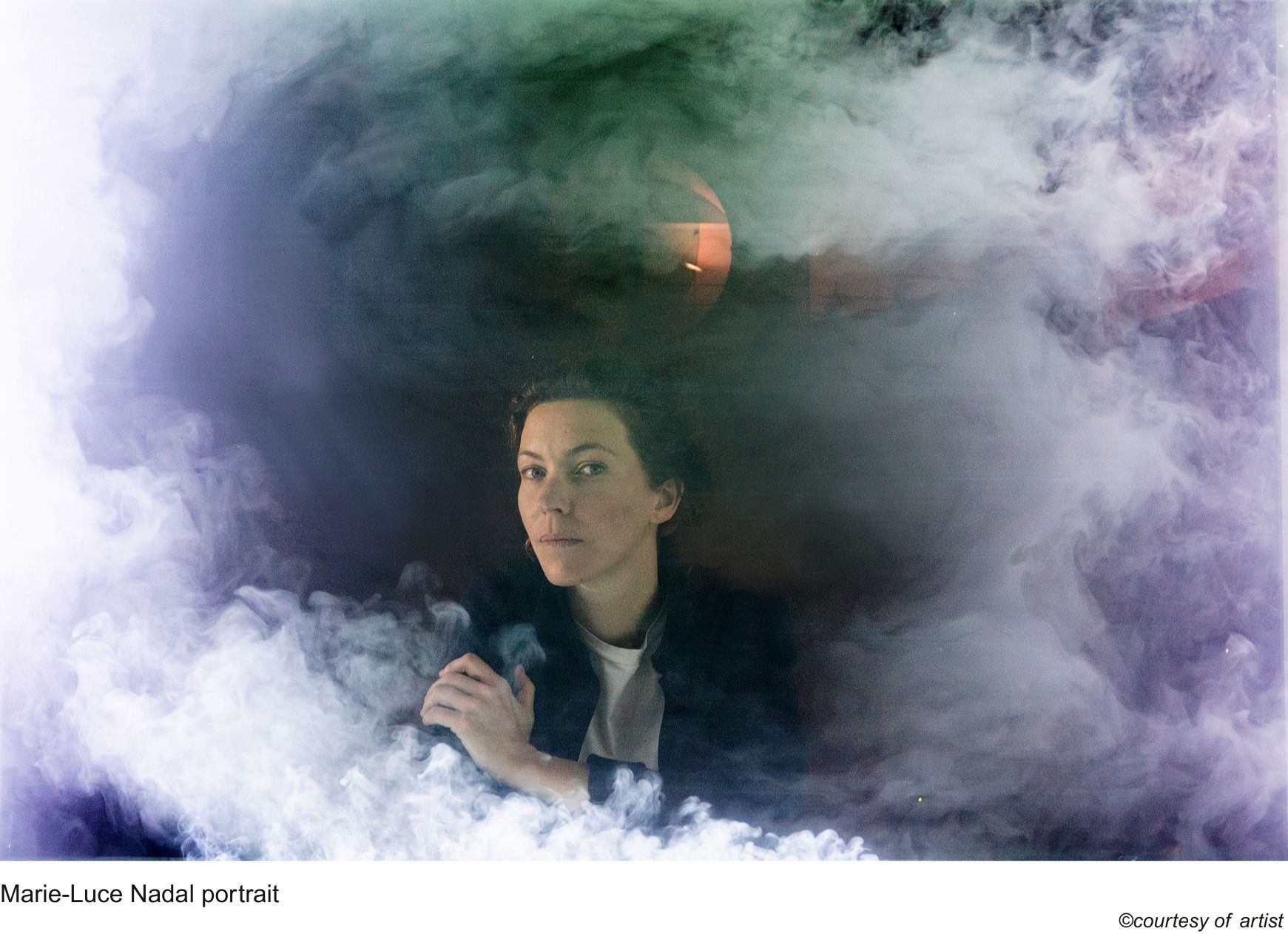
Marie-Luce Nadal presents performative films and pigment prints on metal, staging the atmosphere as both subject and actor — an emotional, political, and volatile body. Through cloud choreography and experiments with natural elements, she draws out the weather’s agency as something embodied, contested, and alive.
On March 30 EdB Contemporary opened a solo show ‘Live Transmissions in Venice’ by Morgan O’Hara (till May 1), curated by Elisabeth de Brabant and Anna Shpilko with the 45 minutes stunning and unique performance. In the performance, O’Hara documents Saverio Pastor, one of the city’s last master fórcola carvers, as well as sound artist Tiziano Pastor, who was simultaneously threading a live soundscape in response to his father’s work using both electronic and acoustic guitars, the last one – a gift from his father. Morgan O’Hara’s Live Transmission series operates at the intersection of forensic precision and empathic resonance, capturing movement in real time through a near-seismographic drawing process. Her practice named “Live Transmissions“ has documented world-renowned conductors, dancers such as Merce Cunningham and Trisha Brown, and performance and sound artists from the New York and Japanese avant-garde scenes since the 1970s.