Elisabeth de Brabant Contemporary
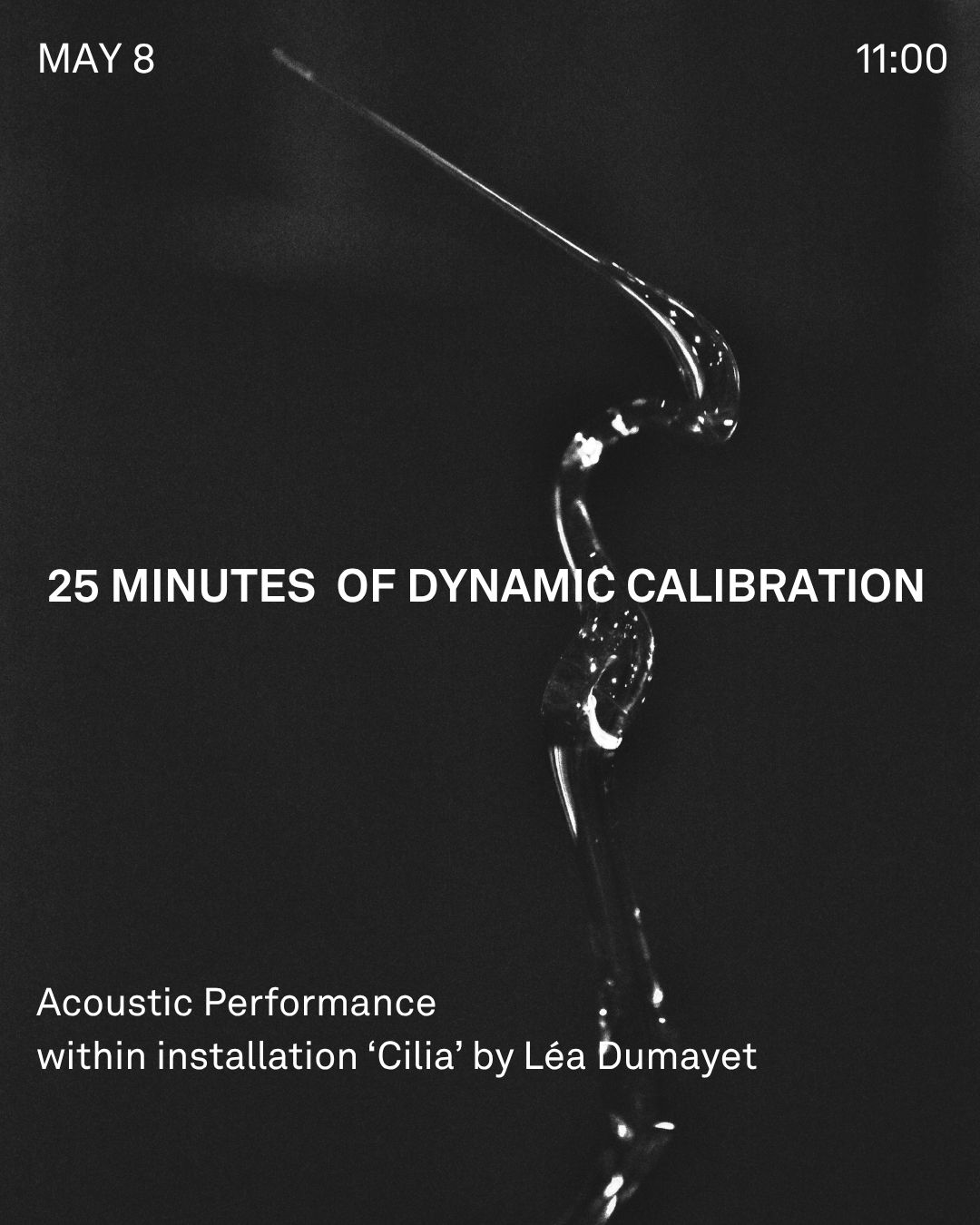
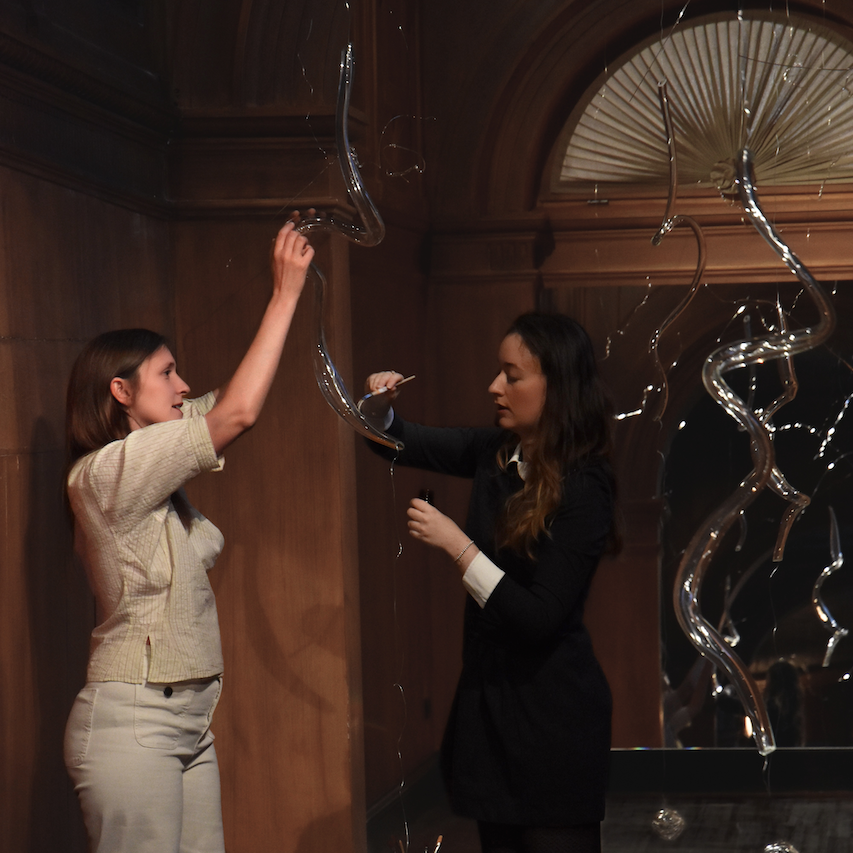
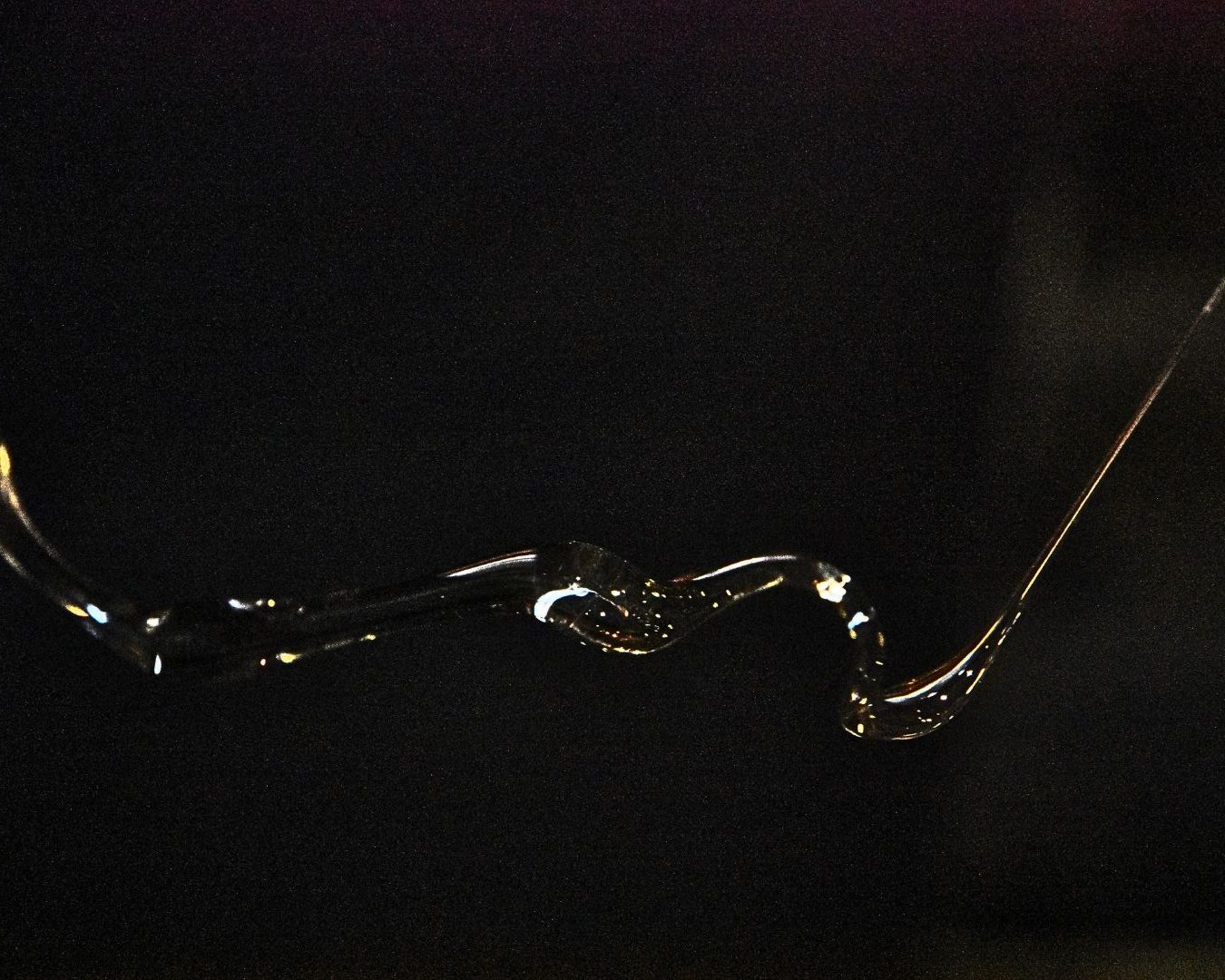
A live acoustic intervention introduced crystal resonance into the space, where glass revealed light and scent rendered the air perceptible as matter. Entering the suspended passage created by Léa Dumayet, invited artist Lidiya Kolodina activated the installation through the sound of a rare glass harmonica, crafted with a specialised glass formula designed to produce a stable and crystalline tone.
As vibrations moved through the metastable forms, the atmosphere, and the body itself, the work shifted into a temporary state of resonance — bringing pulse, tension, and movement into the exhibition for 25 minutes.
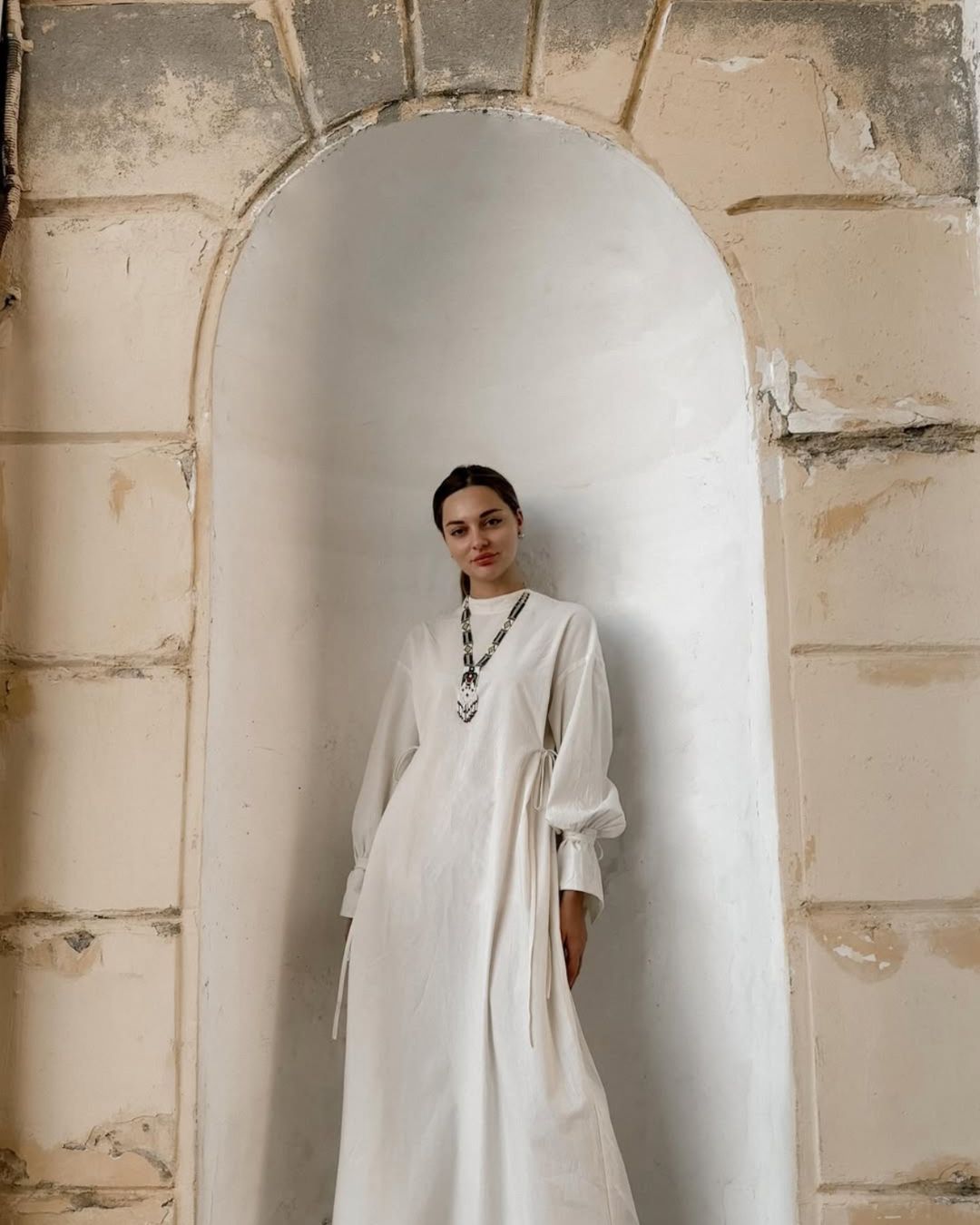
For the performance, Lidiya Kolodina wore Castanea sativa, a sculptural armor by Andrea Bordács from the Armours of Belonging series. The armor was inspired by the chestnut shell, which protects something fragile with its spiny surface. The work reflected Bordács’s ongoing interest in forms of protection rooted not in defense, but in care, resistance, and preservation. As the sound of the glass harmonica resonated throughout the space, the armor became an integral part of the performance atmosphere, creating a subtle dialogue between body, fabric, and acoustic vibration.
The performance unfolded within CILIA and EXUVIAE, offering visitors the opportunity to experience the exhibitions through a subtle sonic environment where sound, material, scent, and movement continuously interacted.

The artist Léa Dumayet invited olfactory designer Daphné Perryman-Holt to collaborate on creating an immersive installation within the exhibition CILIA. The olfactory layer developed in situ reveals elements fundamental to the making of glass: air, water, earth and flame.
‘Together with Léa, we imagined a sensory journey in dialogue with the space, where the humidity, dampness so present in Venice can almost be perceived as a living presence. Very quickly, the idea of translating glass, a fragile yet inert material, led us to explore its transformation.
Inspired by the work of Murano artisans, we chose to evoke the four elements involved in the glass creation proccess.
Air is expressed through an ozonic note, light and transparent, evoking an aerial breath. Water, denser and more fluid, is embodied by an aquatic sensation with slightly iodized accents, recalling the lagoons and submerged woods of Venice. Earth reveals itself through humid, organic notes, inspired by the undergrowth after rain, bringing an almost tactile depth. Finally, fire evokes heat and the transformation of matter.
Throughout the journey, you are invited to smell each work as a sensory experience—an immersion into the elements that give birth to glass.’